 ·
3 minute read
·
3 minute read
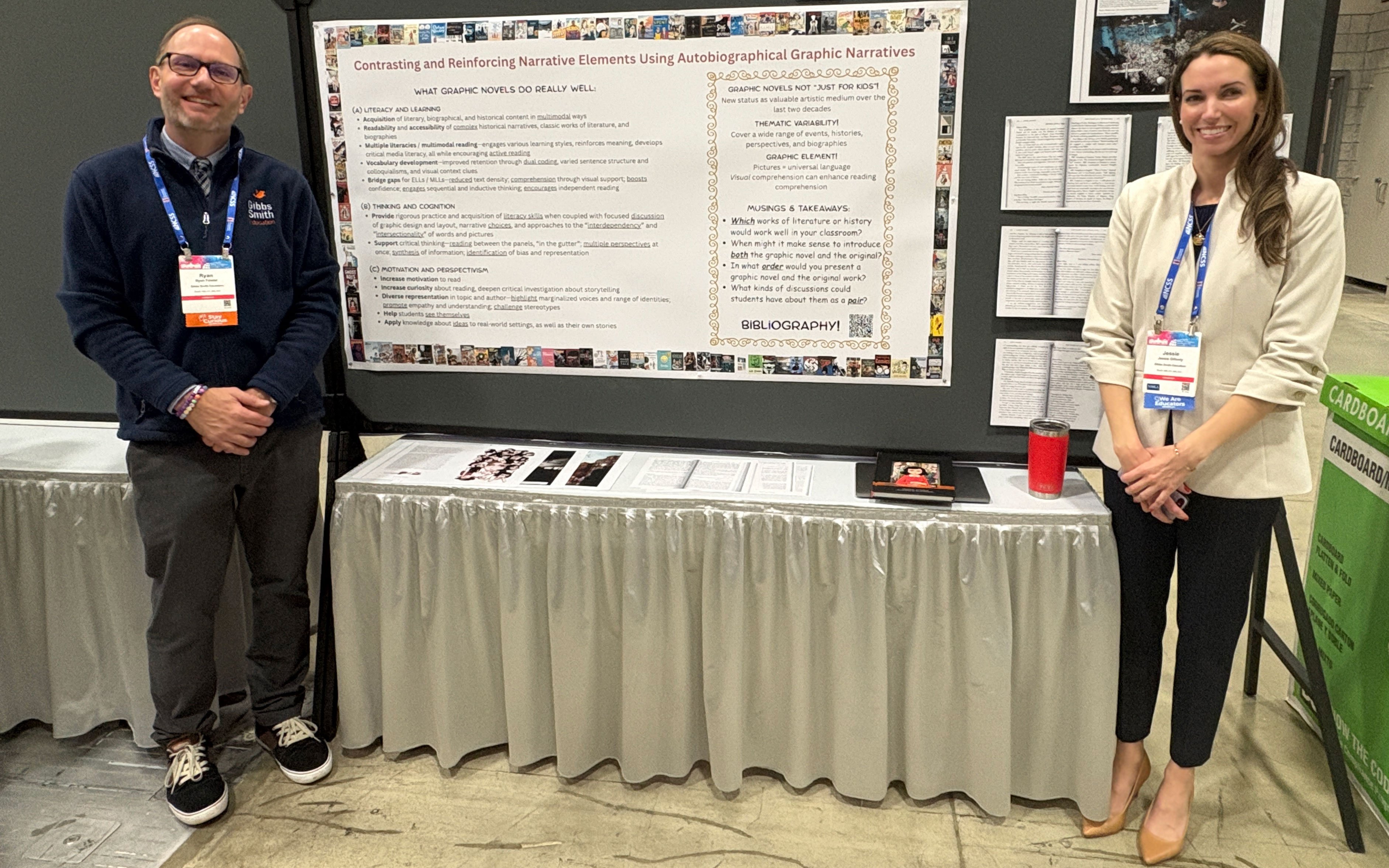
In December 2025, I had the pleasure of presenting at the National Council for the Social Studies (NCSS) Annual Conference with my amazing colleague, Dr. Ryan Fowler. Along with his uncanny ability to find the best hole-in-the-wall taco places, Ryan has been exploring the academic benefits of incorporating graphic novels into education for the past six years. In our presentation, “Contrasting and Reinforcing Narrative Elements Using Autobiographical Graphic Novels,” we presented educators with excerpts from Anne Frank’s The Diary of a Young Girl and Anne Frank’s Diary: The Graphic Adaptation, illustrated by David Polonsky and adapted by Ari Folman in 2018. We spoke with educators about how they could use the unique medium of graphic novels to make history more accessible, inclusive, and engaging to students.
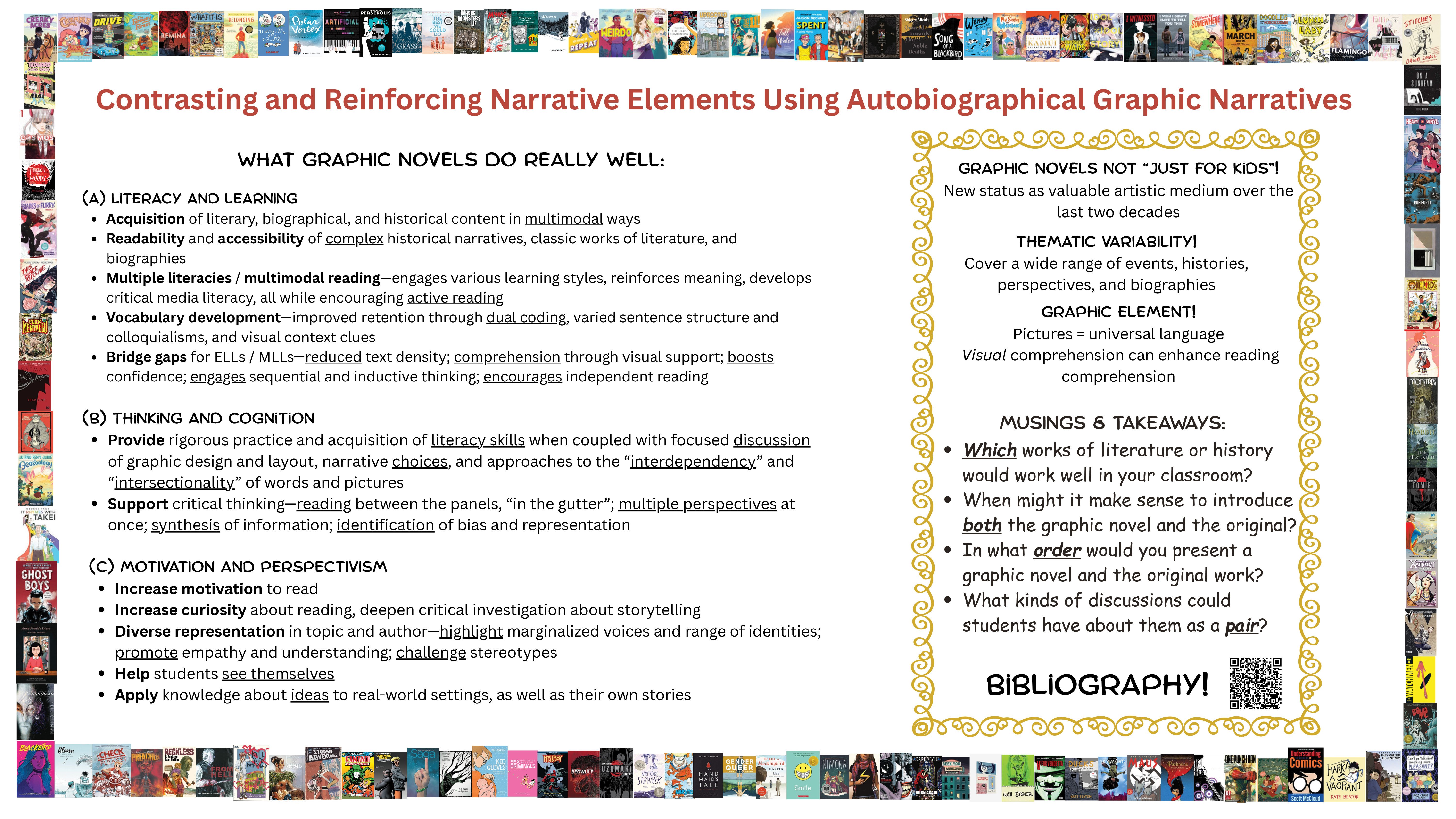
Here’s a quick overview of what we suggested that graphic novels do really well:
(A) Literacy and Learning
- Acquisition of literary, biographical, and historical content in multimodal ways
- Readability and accessibility of complex historical narratives, classic works of literature, and biographies
- Multiple literacies/multimodal reading—engage various learning styles, reinforce meaning, and develop critical media literacy, all while encouraging active reading
- Vocabulary development—improved retention through dual coding, varied sentence structure and colloquialisms, and visual context clues
- Bridge gaps for ELLs/MLs—reduced text density; comprehension through visual support; boost confidence; engage sequential and inductive thinking; encourage independent reading
(B) Thinking and Cognition
- Provide rigorous practice and acquisition of literacy skills when coupled with focused discussion of graphic design and layout, narrative choices, and approaches to the “interdependency” and “intersectionality” of words and pictures
- Support critical thinking—reading between the panels, “in the gutter”; multiple perspectives at once; synthesis of information; identification of bias and representation
(C) Motivation and perspectivism
- Increase motivation to read
- Increase curiosity about reading, deepen critical investigation about storytelling
- Diverse representation in topic and author—highlight marginalized voices and range of identities; promote empathy and understanding; challenge stereotypes
- Help students see themselves in the classroom
- Apply knowledge about ideas to real-world settings, as well as their own stories
When I taught The Diary of a Young Girl to middle schoolers in the late 2010s and early 2020s, it was a struggle to find an adaptation that I could use with students who would have been overwhelmed by the translated text. For many of the older works of literature I taught, the adaptations and revisions were endless, and deviation from the source material felt permissible, considering that the protagonists were all fictional. When we read Arthurian legends, we took a tour through literary history, considering how various authors, artists, song writers, and film makers had reimagined the tales to explore their own culture. Shakespeare’s protagonists were similarly chameleon-like, thriving over hundreds of years because fresh interpretations and retellings have made them ubiquitous figures. But Diary was different. This was not a work written to entertain us, or to explore ideas of right and wrong in the abstract. It felt wrong to bend it into something that made us comfortable.
What I ended up creating to support students was a plethora of context to support the Diary. The resources of the Anne Frank House proved invaluable, and I often found myself turning to films of the 1930s to represent things that might have been familiar to Anne Frank but were alien to my students, like dancing cheek-to-cheek. We watched a video of Veronica Lake demonstrating how factory workers could safely wear their hair, even revealing possible styles Frank describes attempting in one entry. Although my goal was not to assign more reading, sometimes it was inevitable. Before we watched the 1959 film The Diary of Anne Frank, we read multiple analyses of how Frank was often misrepresented, via excerpt or adaptation, as a saccharine, passive figure. While all this context helped students imagine Frank’s world and her legacy, there was no accessible text for students who had previously relied on things like No Fear Shakespeare or modern young-adult retellings of myths and legends to engage with the core message, if not the exact words, of these works of literature.
I may have face-palmed when Ryan and I started discussing graphic novels, specifically adaptations of The Diary of Anne Frank. What I saw in that graphic novel was exactly what I’d needed while I was teaching seventh grade. This was a faithful adaptation that presented so many opportunities for questions and comparisons. The artwork lifted some of the burden from approaching readers, leaving them free to connect with Frank’s experiences and feelings. Some of my colleagues would likely have pushed back at the idea of introducing graphic novels to a literature class. But, as Ryan can explain, graphic novels are a great choice for the classroom. Depending on the audience, graphic novels can even be the primary way in which students acquaint themselves with historical figures, events, and stories.
Our presentation at NCSS sparked so many thoughtful dialogues that we’ve developed a professional learning session to bring the conversation into schools. If you’d like to take a deep dive into how graphic novels, comic strips, and political cartoons can reshape how students in your class experience history, check out our Professional Learning page.