Excerpted from Mosaic: Themes in Asian American Studies
The Hawaiian Islands were formed by volcanoes that erupted on the ocean floor millions of years ago. Over many, many centuries, the hot lava from the volcanoes piled higher and higher under the sea until it finally broke through the ocean’s surface and began forming an island. There are eight major Hawaiian islands, and each one was formed in exactly the same way.
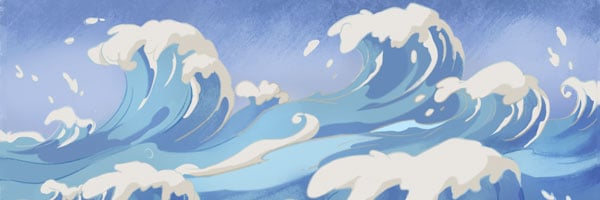
The Kānaka Maoli, or Native Hawaiians, had no written language. All the knowledge they had about everything was in their memory. Each generation passed on its knowledge to the next through the spoken word. The people in those first canoes that landed had brought with them some plants and animals to begin populating the islands. The other thing they brought with them were the stories they had been told by their parents and grandparents. The story of Pele, a Hawaiian goddess, is a well-known and oft-told story passed down from adults to children over hundreds of generations. It is how ancient Hawaiians explained how the islands were formed.
The Legend of Pele
Pele, a beautiful young woman, was the goddess of fire and volcanoes. She is also known as Pelehonuamea (“Pele who shapes the sacred land”) and Ka Wahine ‘Ai Honua (“the woman who eats the Earth”). She often feuded with her older sister, Nāmakaokaha‘i, the goddess of the ocean. After fleeing from their ancestral home in Kahiki (Tahiti), Pele and a few of her siblings looked for a new home. But whenever Pele tried to dig into the ground to build a fire, Nāmakaokaha‘i doused it with water.
Finally, Pele decided to travel to the northern Pacific and find a home where she could start a volcano and send rivers of lava flowing down mountainsides. She first stopped on Kaua‘i, the northernmost island, but whenever she dug her o‘o (digging stick) into the earth to dig a hole, Nāmakaokaha‘i flooded it with water. Frustrated, Pele stopped on every Hawaiian island heading southward until she finally found a home on the Big Island where she lives today at Kilauea Volcano.
Whenever Pele’s lava meets her sister Nāmakaokaha‘i at the water’s edge where the ocean meets the shore, her sister hardens the lava into new land. So, Pele is a creator but also a destroyer. Her hot lava has added thousands of acres onto the Big Island over centuries.
Download a free lesson plan to learn about Kumulipo and celebrate Asian American, Native Hawaiian, and Pacific Islander Heritage Month with your students.
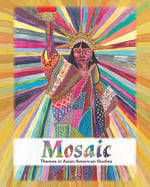 Mosaic: Themes in Asian American Studies
Highlights stories, figures, and developments from diverse communities while exploring themes such as migration, oppression, identity, expression, joy, and resistance.