Watch a news program or flip through the headlines, and you might quickly feel overwhelmed by pandemics, violence, government shutdowns, political division, climate change—the list goes on. It only takes a minute or two of looking at current events for the nation’s (and the world’s) problems to come knocking at your door.
As a social studies educator and someone who generally values being informed, I’m a little embarrassed to say that I did not become a regular consumer of the news until a little over a decade ago. Driven in part by a desire to better understand the events unfolding around me and a newfound sense of responsibility as I embarked on my journey into parenthood, I became a subscriber to several news outlets. Since that time, I can proudly say that I have become better aware of what is going on in the United States and the world at large—but I have also felt increasing amounts of anxiety, frustration, and overwhelm. When I read about the inequality, oppression, violence, and suffering that are commonplace in our world, I often feel compelled to do something about it, but at the same time I know it is impossible for one person to fix the problems of the world. This can lead me to feel defeated before I even get started.
Regular news consumption can increase stress and feelings of hopelessness. According to a 2022 article by Charlotte Huff for the American Psychological Association, frequent news consumption can increase emotional distress. As we read or view news on what often seems like a world spiraling out of control, it can be difficult to feel hopeful. If we as adults are experiencing this turmoil and sense of helplessness from consuming the news, there is no doubt that our students are as well.
Because of the association between news consumption and issues such as anxiety, there is a popular notion that people can guard their happiness by turning away from the news. This has caught on in our culture of self-help and self-care. Rather than leaning into our discomfort, we are told we should shelter ourselves from it. The problem, however, is that turning away from the problems does nothing to help us solve them.
So how do we balance a need for mental health and emotional safety while doing our civic duty to be engaged, informed citizens? I have found that the answer is often to think locally. In my work as editor of Gibbs Smith Education’s diversity studies series, I have seen repeatedly the impact of grassroots activism. You do not need to aim for global impact to make a global impact. Dolores Huerta, Larry Itliong, Dennis Banks, Ella Baker, Sylvia Rivera, and Judith Heumann were focused on the issues that impacted their immediate communities. They did not necessarily set out to solve the world’s problems. Instead, they looked around themselves, saw how issues like segregation, discrimination, and unfair working conditions impacted their family, friends, and neighbors, and set to work. Their local actions eventually brought results that inspired people and movements worldwide.
By focusing our attention and efforts on the needs of our communities, we can see our agency and have a tangible impact on the challenges that matter to us. These community-based strategies benefit students as well. While exploring challenging current events issues, we can point them toward solving problems and effecting change at a local level. Youth Participatory Action Research (YPAR), often used in ethnic studies courses, supports students in identifying the inequities and opportunities within their lives and communities, conducting research to better understand them, and developing innovative solutions to create positive changes they can see. And research backs the idea that community engagement reduces symptoms of anxiety and depression.
So, the next time you’re looking at the news and feeling helpless about giant, systemic issues like affordability, drug epidemics, crises in our schools, or political conflict, remember that you can make a world of difference right where you are. We do not need to turn away from what is going wrong in the world, but we can tune in to the needs of our communities. As educators, parents, and community members, we can model and support community engagement for the students in our lives, strengthening our sense of self-efficacy while empowering them. Not sure where to begin? We have resources on YPAR, community-based learning, and civics education that can help you get started.
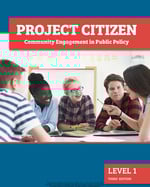 Project Citizen: Community Engagement in Public Policy
Project Citizen engages students in proposing public policy solutions to real-world problems in their communities. Using 10 clearly defined action steps, students learn the skills and knowledge they need to be active, responsible, and impactful citizens.